AI Hiring
12.09.2025
How to Improve the Quality of Contract Engineers in Financial Services

The Karat Team
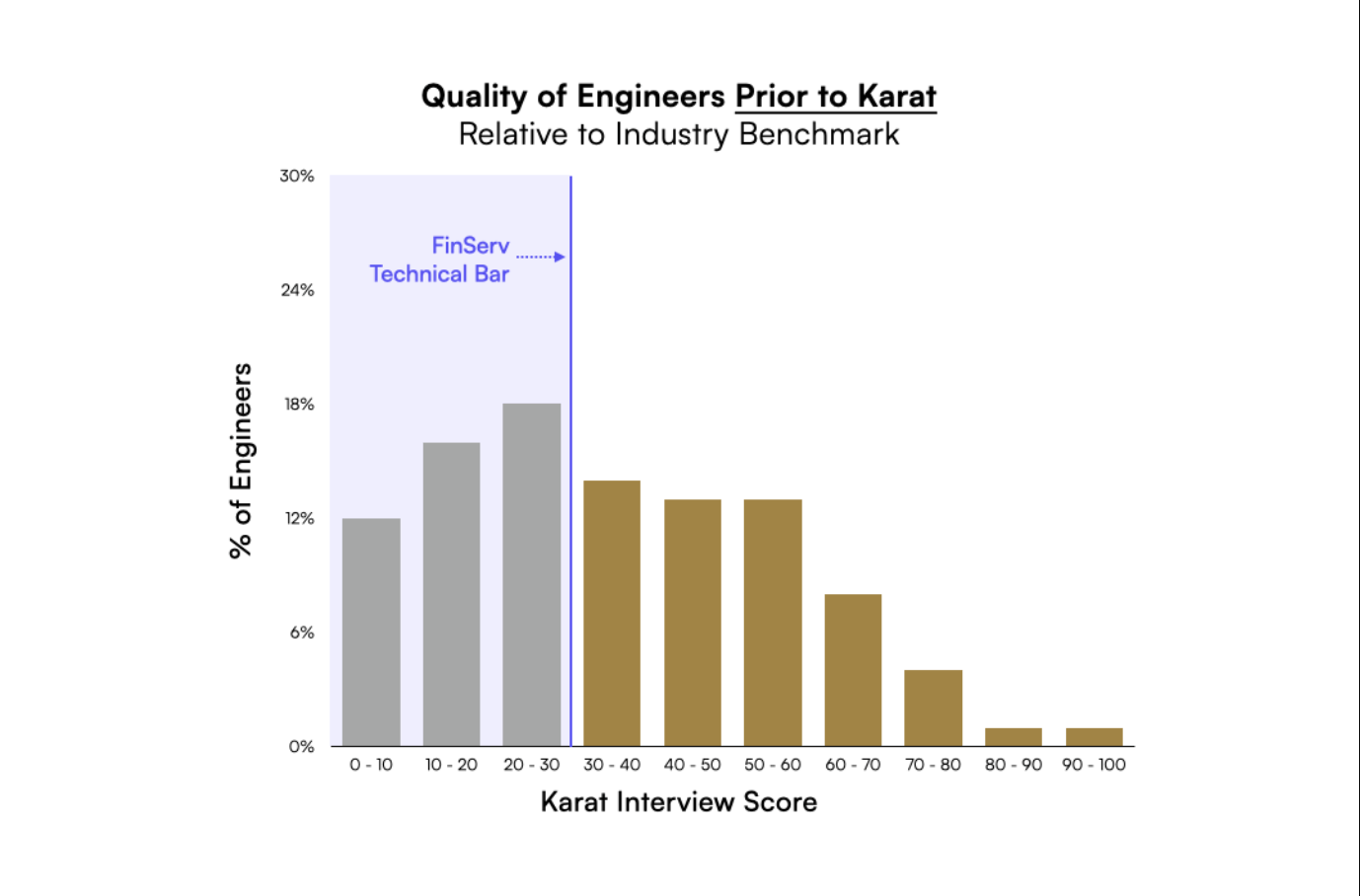

Financial services (FinServ) organizations are increasingly relying on contract engineers. They’re among the top five industries driving outsourcing demand, and the European Central Bank found that banks increased their budget for information and communication technology services by an average of 2.1% from 2023 to 2024.
Outsourcing provides access to specialized talent, as our data shows that some IT Service Providers (ITSPs) have talent pools that are strong in certain roles or skills. Other benefits include faster scaling and the ability to increase or decrease headcount as needed. However, the growing reliance on external talent also introduces a growing risk. Contractor quality often varies, resulting in a talent gap between contractors and full-time engineers.
This difference in talent quality slows down financial services and enterprise engineering delivery, especially during AI transformation. The solution requires moving from subjective evaluation to objective measurement. By implementing standardized assessments, role-based benchmarks, and shared visibility into talent quality across enterprises and ITSPs, both sides can make better placement decisions and improve talent quality.
Evaluate your current contractor talent and learn how Karat benchmarks Contractor Quality, or continue reading to fully understand the quality gap and strategies for elevating contract engineering quality across the board.
Why Contractor Quality Matters
FinServ engineering teams are under pressure to ship faster and deliver more secure, AI-ready systems. To meet this demand, contractors have become essential.
At the same time, the talent landscape is shifting.
- GCCs are also attracting engineering talent. Indian cities such as Bangalore, Hyderabad, and Pune have some of the largest engineering talent pools in the world. They also usually offer favorable government policies, economic incentives, and well-developed infrastructure. These factors have caused many global organizations and tech giants to set up GCCs in India.
- Talent expectations have risen due to compliance demands and AI productivity gains. With FinServ institutions facing increasingly stringent regulatory requirements around data security, privacy, and system reliability, engineers must understand secure coding practices and compliance frameworks. At the same time, AI is raising the bar for engineering productivity. The strongest engineers now produce outsized value when using AI, allowing them to pull further ahead of low performers. Tech leaders say a strong engineer is now worth at least 3x their total compensation, while 59% say low-performing engineers deliver net zero or negative value in the AI era.
FinServ contractor quality hasn’t kept up with these changes. Enterprises don’t have a consistent system for vetting contractor quality, while ITSPs face finite talent pools, vague job descriptions, tight customer timelines, and fierce competition that is cutting into margins. The result is a widening gap between the engineering capability enterprises need and the quality that ITSPs and the market can deliver.
Quantifying Contractor Talent Gap
Our data shows that the scale of the talent gap is significant.
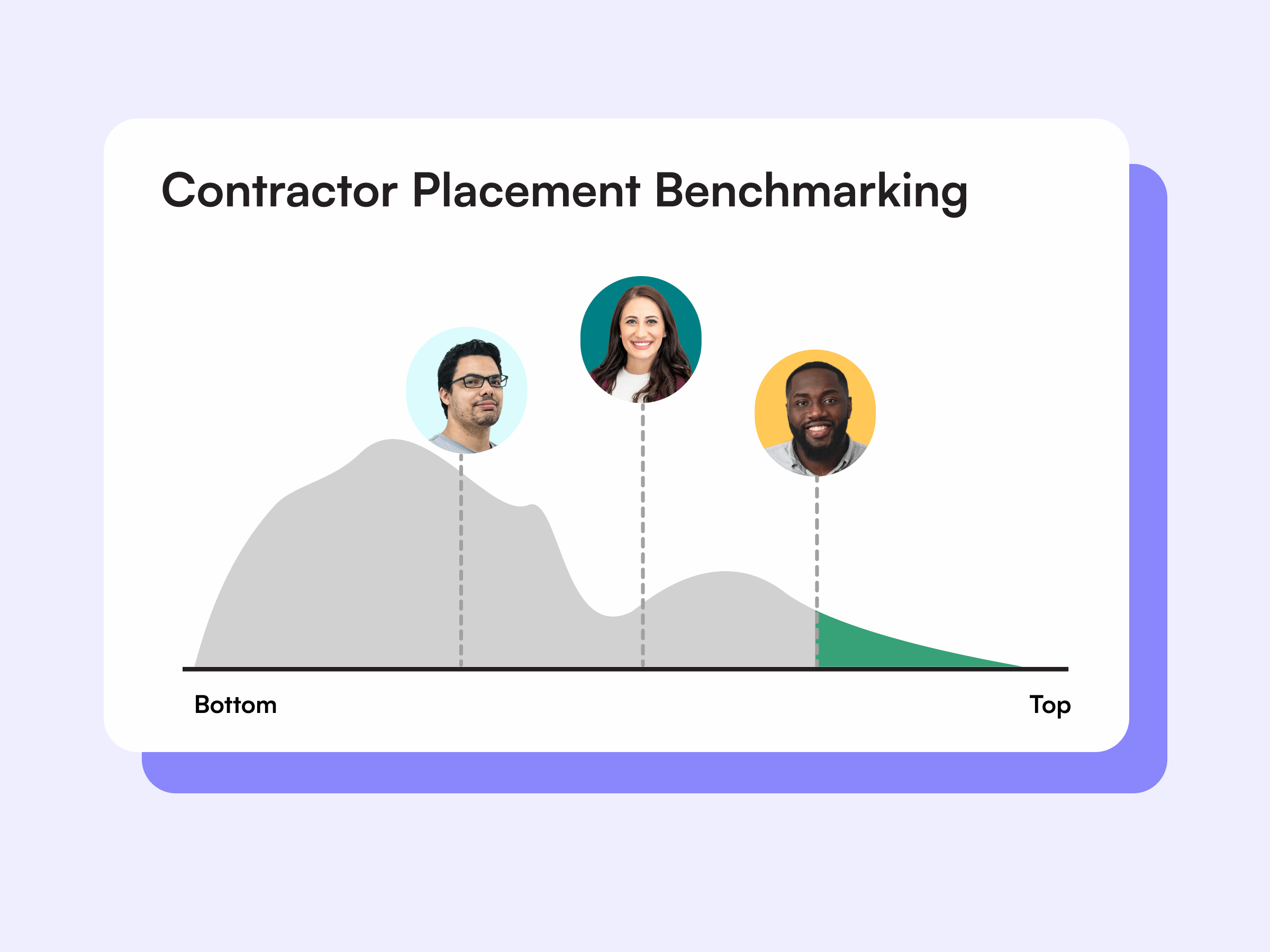
- Nearly half (45%) of contractors fall below the Tier-1 bank bar.
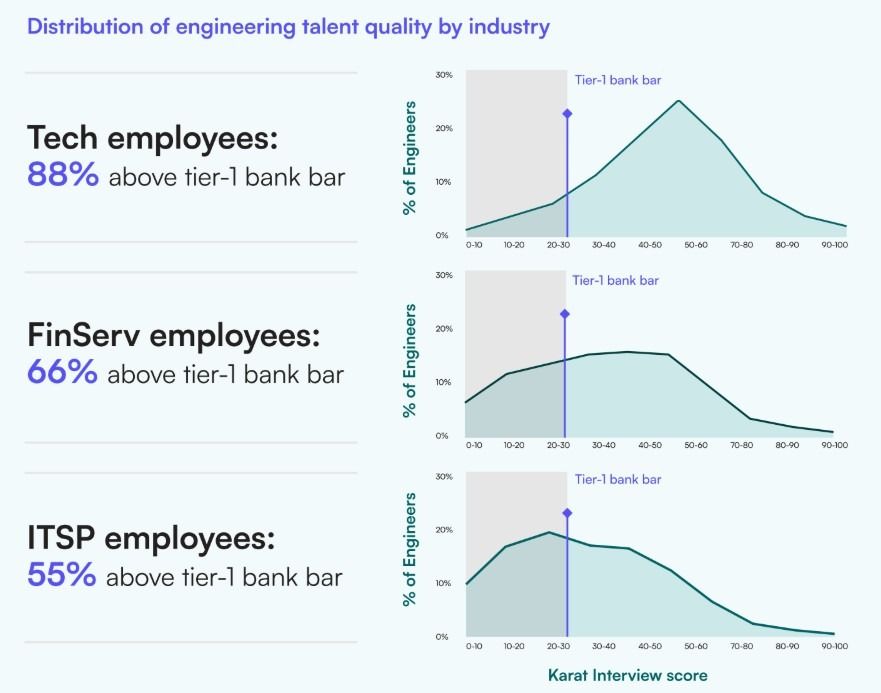
- Pass-rate differences vary 20% to 40% by ITSP.
- Contractor performance for different roles and specialties vary by ITSP. One provider might have strong backend engineers, while another has better talent for data engineering.
Root Causes: Why Contract Engineers Fall Behind
1. ITSPs and Enterprises Lack a Shared Definition of Engineering Quality
- Technical evaluations can vary widely by region, manager, client, and seniority of the role.
- Without a shared definition, a “good engineer” means different things to different people.
- Some ITSPs over-index on contractor availability or speed to hire, rather than technical skills.
2. Enterprises Don’t Apply the Same Rigor to Contractors
- Enterprises often have tight deadlines to fill contractor roles, which leads to prioritizing speed over quality.
- Enterprises assume that ITSPs deeply vet engineers, but the reality is that each ITSP evaluates candidates differently.
3. Contractor Quality Isn’t Evaluated in Real Engineering Environments
- Many assessments lack production-grade environments. They still rely on take-home coding tests that make it difficult to figure out whether you’re assessing the candidate’s skills or an AI’s skills. Others simply give candidates access to an AI tool without specifically being designed to measure AI-enabled engineering skills.
- Without production-grade environments, it’s difficult to evaluate debugging, decision-making, and code quality. When interviewers can’t clearly see what’s being produced by the candidate versus AI or interact with candidates to understand their thought process, they can’t accurately assess the engineer.
- The result is discrepancies between candidates’ resumes and actual capabilities, as well as inconsistent job performance.
How Contractor Quality Issues Impact Enterprises
Business Impacts
- Delivery delays: When engineers are evaluated based on inconsistent assessments or technical bars, they’re more likely to be placed into roles that don’t align with their actual capabilities. This mismatch results in longer ramp-up times and more review or rework, slowing down projects and pushing out release dates.
- Increased costs: Enterprises end up paying more when the hired contractor doesn’t meet their requirements. They need to spend additional time and resources on either upskilling the contractor or starting the placement process all over again to replace them.
- Partner inconsistency: Without a shared quality bar across ITSPs, their performance varies widely. This makes it harder for enterprises to plan, allocate resources, and reduce predictability when working with multiple ITSPs.
Risk and Compliance Impacts
- Security vulnerabilities: Poor engineering can increase the likelihood of outages, downtime, or security flaws. Some banks have experienced this firsthand over the last two years. They’re bogged down by outdated, poorly written code, which causes costly and disruptive issues that impact millions of customers.
- Inconsistent SDLC practices: Engineers with less skills or experience can introduce inefficiencies, create technical debt, or compromise quality or security, negatively impacting the software development lifecycle (SDLC). They may also be less familiar with best practices, which makes it harder to enforce standards around testing, code quality, and deployment.
- Harder to meet regulatory requirements: Inconsistent engineering practices make it difficult to uphold security and compliance requirements that are critical in regulated industries such as financial services.
Team Impacts
- Internal engineers spend time fixing contractor work: Less skilled contractors cause internal engineers to spend more time performing code reviews, overseeing contractor work, or rewriting code. In fact, up to 42% of developers’ time is wasted on fixing technical debt. This reduces their capacity for building new features or focusing on high-value initiatives.
- Harder to build high-performing hybrid teams: Skill disparities can create friction between FTEs and contractors, eroding trust and collaboration. Engineering leaders may need to redistribute work or spend more time on team coordination.
- Creates long-term quality debt: Compromising on engineering quality leads to inconsistent work and operational issues that accumulate over time. It’s difficult and expensive to maintain a fragile codebase, as unhealthy code has 15x more defects than high-quality code and slows down development by 124%. Eventually, significant refactoring is needed.
For Enterprises: How to Fix the Contractor Quality Gap
1. Apply the Same Rigor to Contractors That You Use for FTEs
Implement standardized, role-based assessments for all engineering roles, regardless of employment type. This ensures everyone is evaluated in the same way, and contractors are held to the same standards that FTEs are.
Benchmark across teams, roles, and partners. Setting consistent benchmarks that span internal teams and ITSP partners gives you a clear view of where contractor talent is ahead or behind. When you can see where there are skill gaps or how one ITSP compares to another, you have the insights needed to strategically allocate resources, consolidate partners, optimize spend, and make informed workforce decisions.
2. Make Quality Across ITSPs More Visible
Implement scorecards, also known as scoring or interview rubrics, that break down a role’s required competencies and establish a consistent rating scale. Scorecards help you standardize evaluations across interviewers, teams, and ITSPs, making talent quality measurable and transparent.
Conduct ITSP-to-ITSP comparisons to understand which partners are reliably meeting your bar and which ones require more support or recalibration. Use this to optimize resource allocation and guide renewal decisions.
Make sure you’re able to track improvements. Use the data above to set expectations with ITSPs and then measure their progress over time. You’ll be able to see whether ITSPs are responding to your feedback and hold them accountable.
3. Build an AI-Ready Talent Pool
Evaluate candidates on real-world AI engineering tasks and skills. AI tools and AI-augmented workflows are becoming a core part of an engineer’s day-to-day work. The majority of developers are either already using or planning to use AI tools, with 47.1% using AI tools daily. Standardized assessments like tasks that require using AI tools, reviewing AI-generated code, and integrating AI into existing systems will accurately show you which candidates can succeed in the AI era.
Identify skill gaps early. Once an engineer is hired and embedded in critical projects, it becomes costly and disruptive to replace them. By understanding candidates’ AI proficiency during the evaluation process, you can then decide on the best path forward. Perhaps you need your ITSP partners to provide different candidate profiles, or maybe you’re willing to hire the candidate and provide training.
These steps ensure that contract engineers are consistently assessed, clearly benchmarked, and AI-ready, just like full-time engineers. See how Karat Partner Talent Solutions provides a proven way to help enterprises operationalize this.
For IT Service Providers: How to Place More Engineers Successfully
1. Identify the Strengths of Your Engineering Pool
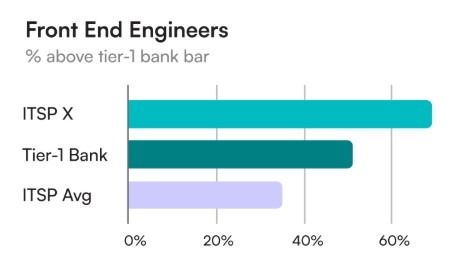
Use benchmark data to see where engineers excel by role, region, or seniority. There are certain roles and use cases where contract engineers outperform their peers. For example, we found that one ITSP’s front end contractors not only outperform the ITSP average but also the tier-1 bank bar. By knowing where your talent pool excels, you can lean into those strengths and differentiate yourself by becoming the go-to partner for specific roles or skills.
Focus on areas where failure patterns are strongest. Instead of spreading upskilling efforts and resources across every capability, it’s better to direct it toward skills, technologies, or roles where ITSP contractor quality consistently falls below the bar. By focusing on where the largest gaps are, you’ll accelerate improvement, show clients that you’re systematically addressing weaknesses, and build a well-rounded talent pool with specialized strengths.
2. Establish a Technical Bar Across Your Organization to Deliver Consistent Quality
Reduce variance between managers and regions. A single, shared talent bar that can be measured through scorecards, benchmarks, and other data ensures that an engineer who is approved by one manager or office would also pass with another. Candidate outcomes shouldn’t depend on who interviewed the candidate, but rather the candidate’s actual technical capabilities.
3. Build a Differentiated “Quality Narrative” for Clients
Show objective engineering vendor quality signals such as pass rates and score distributions to demonstrate the quality of your talent pool. This gives clients confidence that your claims are backed by real data.
Demonstrate where your engineers excel. Highlight the roles, skills, or regions where your talent pool consistently outperforms market benchmarks or internal teams. Tech leaders currently view access to specialized skills or expertise as the greatest value that contractors provide. By understanding what clients are looking for and showing how your talent pool excels in meeting their specific needs, you’ll set yourself apart from other ITSPs.
Position your ITSP as a high-quality partner, not just a vendor. Leading with data, highlighting your strengths, and demonstrating continuous improvement will transform how clients view your organization. They’ll see you as a strategic partner that’s able to boost their engineering talent and not just supply headcount.
Case Study: How a F100 FinServ Institution Elevated Contractor Quality
A global Fortune 100 FinServ institution was struggling with low-quality contractor talent and underperforming teams. To fix this, they partnered with Karat to introduce a consistent technical standard for all contractors and track the performance of their ITSPs.
The organization:
- Achieved a 60% increase in above-bar placements.
- Accelerated time-to-placement by 9 days.
- Refined their sourcing strategy to focus on top ITSPs.
Now, the organization sees improved productivity and ROI. Their new technical standard and Karat’s ongoing support has resulted in higher-performing contractor teams and stronger, data-informed relationships with their ITSP partners.
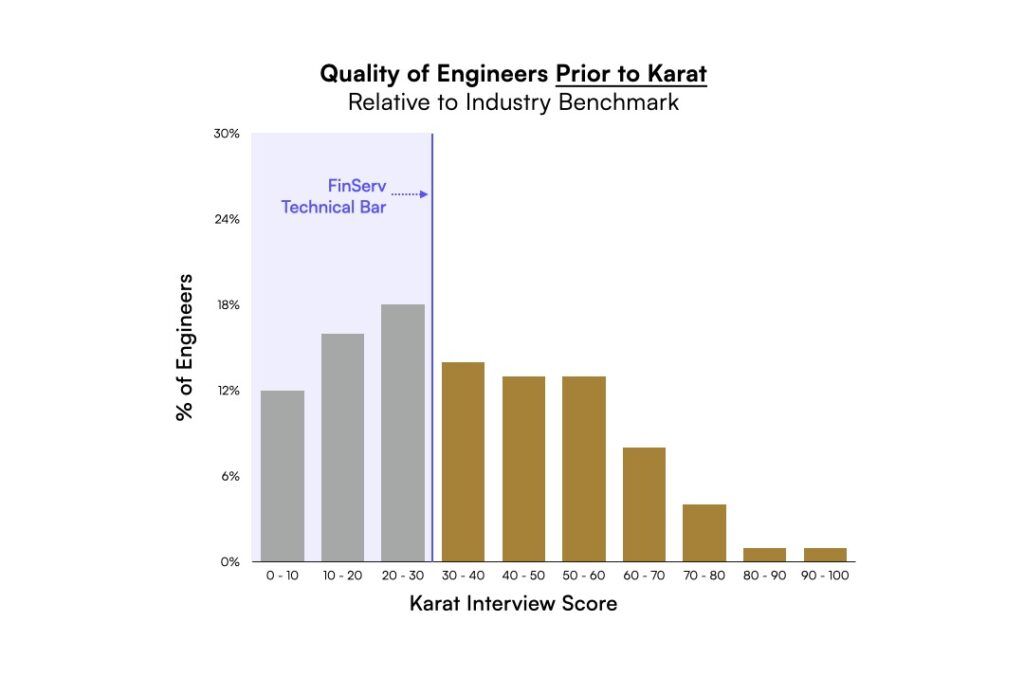
The Path Forward for Higher-Quality Contractors
Contractor quality challenges are rising due to inconsistent standards, talent shifts toward GCCs, and the demands of AI transformation. But with shared benchmarks and standardized evaluations, both enterprises and ITSPs can improve engineering quality and delivery consistency.
For enterprises that are ready to close the contractor quality gap, explore Karat Partner Talent Solutions to take the next steps or learn how leading FinServ teams evaluate contractors.
Related Content
Contractor Hiring
01.28.2026
For most financial services organizations, software contractors aren’t optional. Whether it’s modernizing core systems, accelerating digital initiatives, or scaling delivery capacity, CIOs rely on IT Service Providers (ITSPs) to keep projects moving. But as many leaders have learned the hard way, contractor quality often fails to meet expectations. Last summer, Karat launched the first Partner […]

AI Hiring
01.21.2026
AI is changing technical hiring by accelerating every stage of the funnel and making it harder to identify genuine software engineering skills from AI-assisted output. Candidates can now easily produce polished resumes and correct interview answers, even if they lack the necessary skills or knowledge. This degrades hiring signals and is forcing companies to rethink […]

AI Hiring
01.14.2026
Conventional wisdom about AI’s impact on employees is that it acts as an equalizer. It’s expected to offset employees’ or skill gaps, but our data shows that isn’t the case for software engineers. AI is actually a multiplier. Strong engineers who can leverage AI are producing outsized value, which means the gap between them and […]