Industry Trends & Research
12.16.2021
Is Python swallowing the technical interview?

The Karat Team


Python and Java are two of the most frequently used programming languages among professional developers according to the Stack Overflow 2021 developer survey. So it’s no surprise that these are the two most popular coding languages we see during University Recruiting season as tech companies interview thousands of intern and new grad candidates each fall.
In 2021, Python again dominated the University Recruiting landscape increasing by nearly 2 percentage points compared to 2020. Java and C++ also saw modest gains.
Interestingly, while JavaScript is the #1 most popular programming language (68.6% of professional developers use JS, via Stack Overflow), its use in early career interviews remains minimal, with under 2% of intern/new grad candidates using JavaScript for their technical interviews this year.

There are two root causes for Python’s prevalence in technical interviews
The first is a continued curriculum shift towards Python at the university level. As far back as 2014, Python had become the most common programming language taught in introductory programming courses.
This is due to an increased hiring demand for Python, which tends to be a preferred language for AI/ML-focused and cloud-native programmers. This is significant, and as technology initiatives for organizations across virtually every industry surged during the pandemic, accelerating digital transformation and increasing the demand for those skill sets.
The second reason is that the succinct nature of the language lends itself well to timed coding exercises. Candidates who program in Python consistently advance further into the coding section of their interviews. For organizations that value solution completeness, speed becomes a measurable component of the hiring signal, which means that completing more questions improves a candidate’s chances of making it to a final interview loop.
Python code lengths can be 3-4 times shorter than Java and 1-2 times shorter than C++, which lends well to timed coding exercises. Depending on who you ask, this is one of the issues with traditional technical interviews.
For candidates going into technical interviews, we always recommend selecting the language that you’re most comfortable with to build confidence. But one trade-off candidates may consider is code length, and if all things are equal, there’s a considerable benefit to choosing a tool built for speed.
The long-term trend shows a steady increase in Python use over the past five years. In 2017, Java was the most used language with 55.6% of all intern and new grad interviews Karat conducted. Python was the second most common, being used 28.7% of the time.
As Python has become more popular, Java has steadily been used less. C++ and JavaScript have been used at relatively consistent rates, despite a moderate increase in JavaScript usage in 2020.

We’ll be interested in watching the trend evolve over time as new technologies, roles, and needs enter the marketplace in the years to come. Let us know what comments or questions you have!
Related Content
AI Hiring
12.09.2025
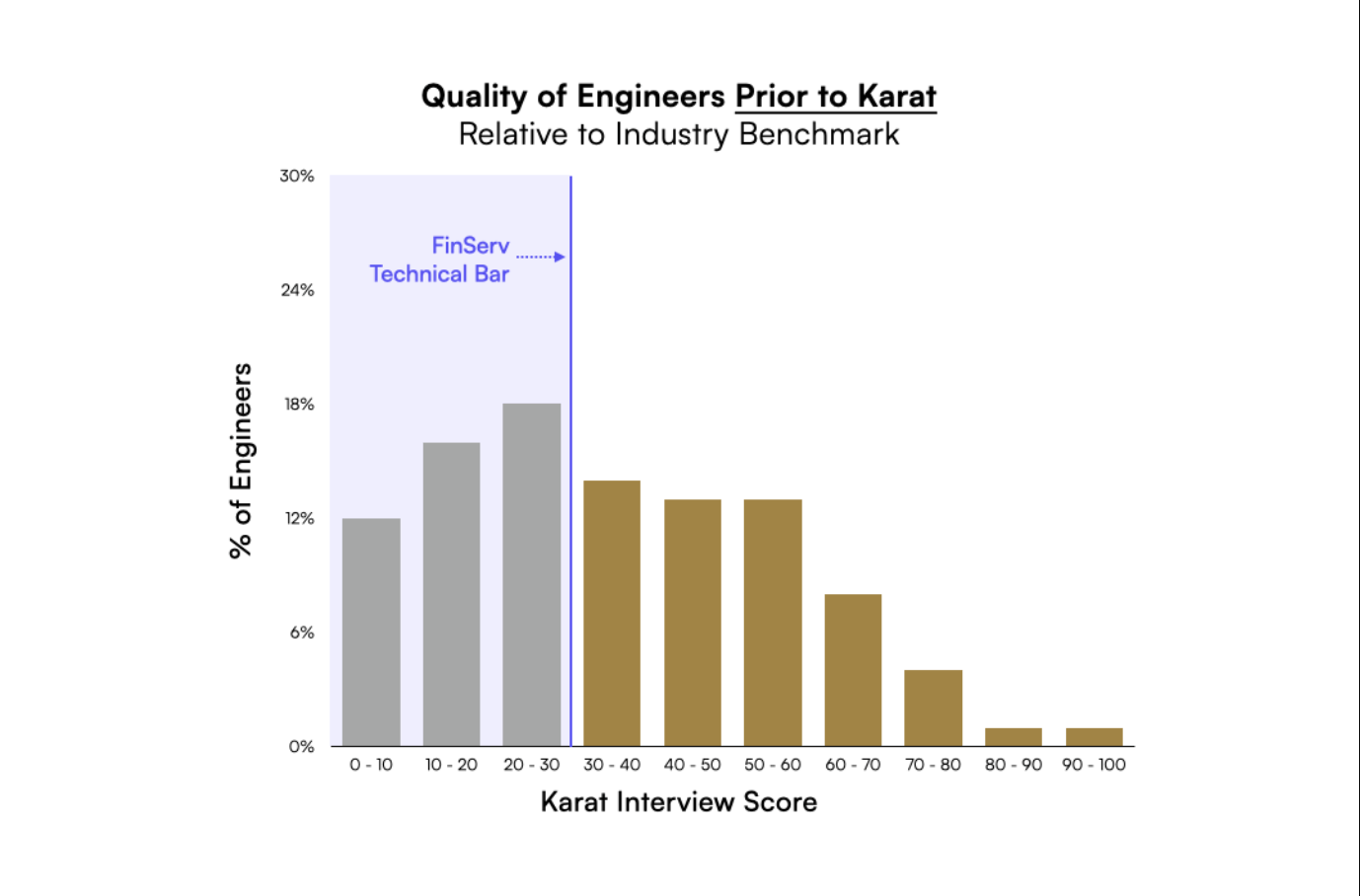
Financial services (FinServ) organizations are increasingly relying on contract engineers. They’re among the top five industries driving outsourcing demand, and the European Central Bank found that banks increased their budget for information and communication technology services by an average of 2.1% from 2023 to 2024. Outsourcing provides access to specialized talent, as our data shows […]

Global Hiring
11.26.2025
The growth of global capability centers (GCCs) in India has exploded over the past few years. Hiring targets for 2024 were more than double that of the U.S., with an average of 790 open roles in India. This represents a 19% year-over-year increase. Real estate is also becoming impossible to find in GCC hubs such […]
AI Hiring
11.21.2025
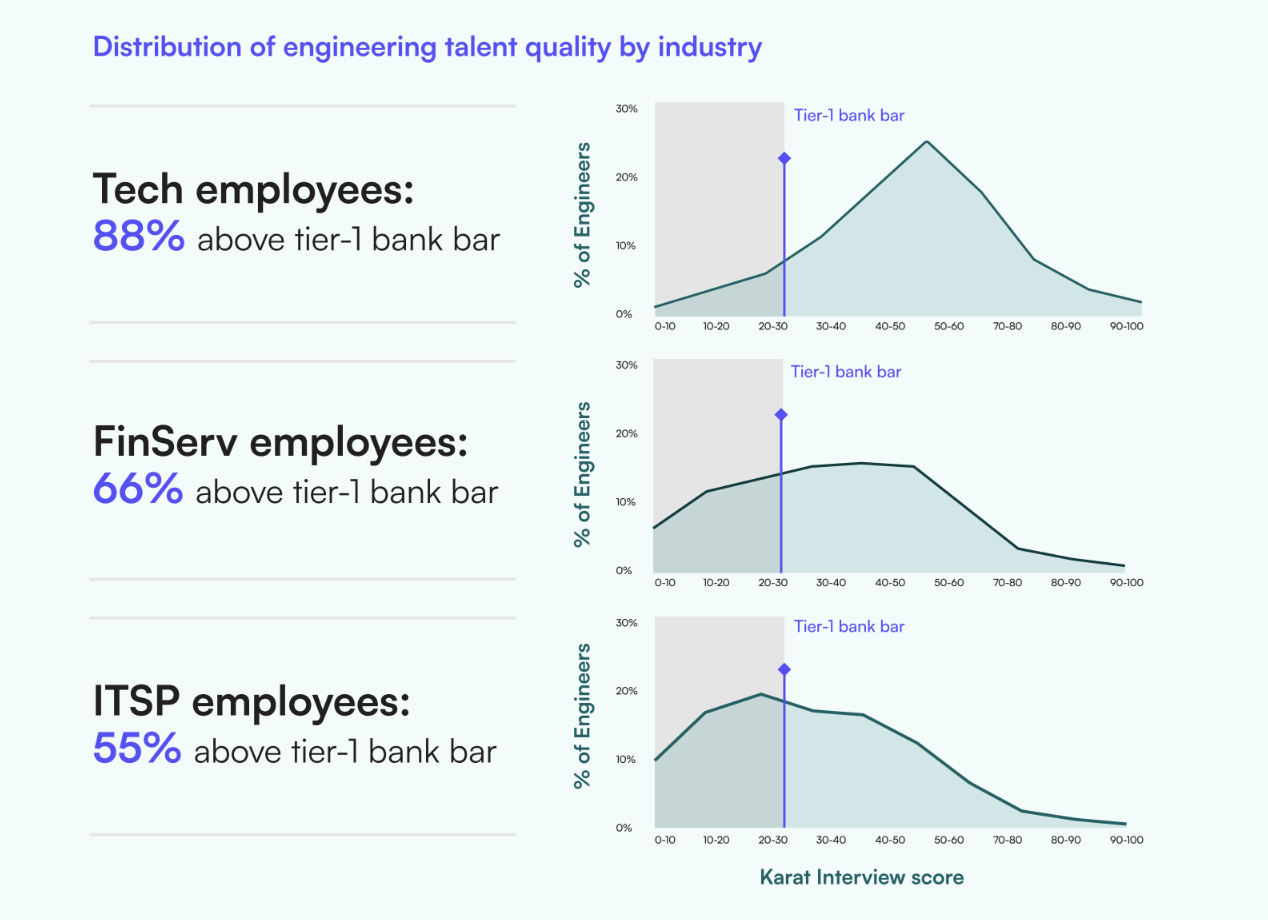
AI is transforming the financial services (FinServ) industry, from trading to digital banking and fraud detection. As demand for digital innovation increases, FinServ organizations are increasingly relying on contractors and IT Service Providers (ITSPs) to deliver rapid progress while minimizing risk. Their expectations are rising at the same time, as engineering teams need to meet […]