Industry Trends & Research
12.08.2022
Top cities in the United States for hiring software developers

Gordie Hanrahan
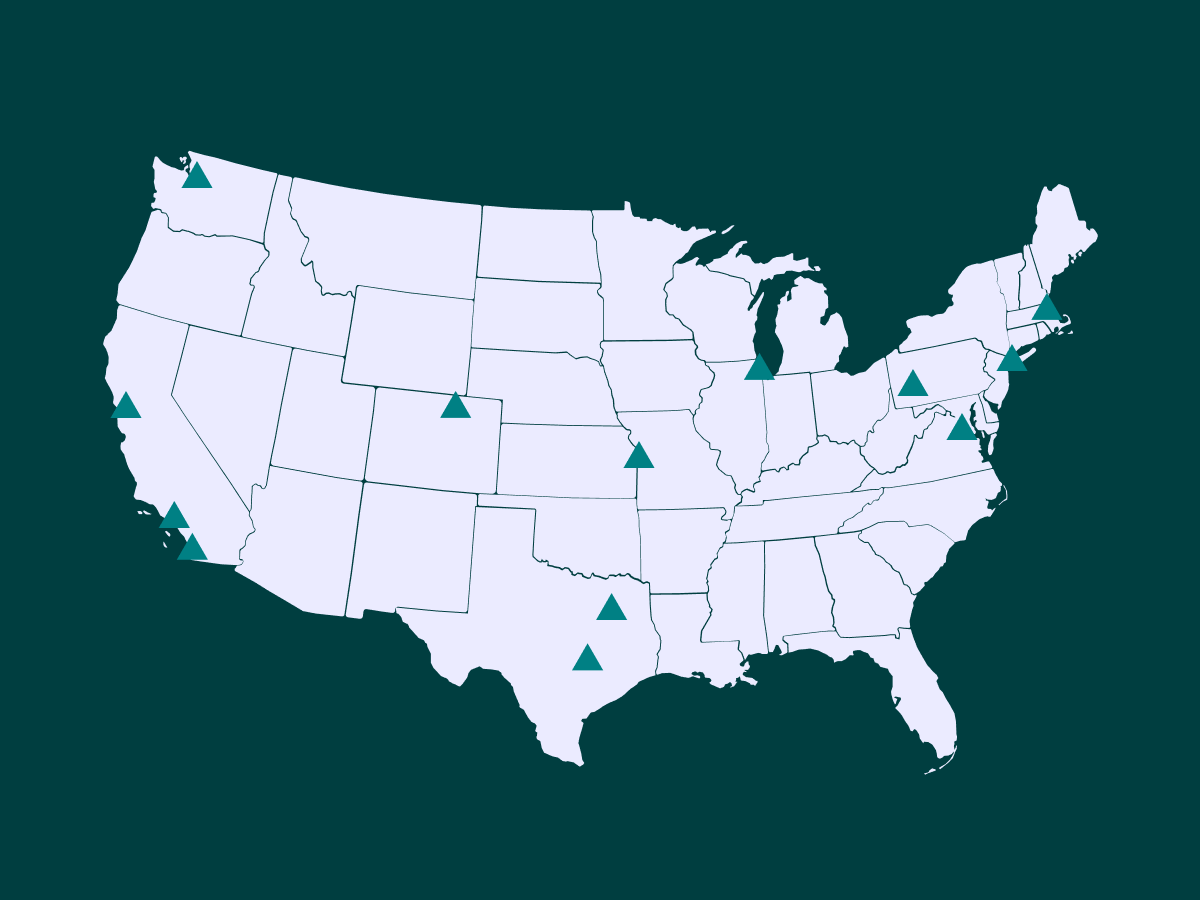

2022 represented a shift in the tech hiring landscape. Tech layoffs and hiring freezes produced an influx of high-performing software developers on the market. Talented engineers started to prioritize the security of larger enterprises over the hypergrowth segments, driving up close rates in industries like financial services, insurance, and telecom. And despite high-profile return-to-office mandates, remote hiring remains a consistent trend across this year’s list of the top cities in the United States for hiring software developers.
One interesting shift in hiring trends is that many organizations are being far more intentional about their hiring decisions than in previous years. From the second half of 2020 through early 2022, the Great Resignation created an extraordinarily candidate-friendly job market. In 2021, Employers were hiring engineers at a breakneck pace just to keep up with attrition, let alone hiring for growth.
This dynamic has given way to a new landscape. Today, organizations that are still hiring are focused on finding the best talent available. They are more selective with offers and are willing to interview more candidates for each open role to find the best engineers. As a result, top candidates have fewer competing offers and are more likely to accept job offers than at any other time in the previous three years.
As a result of this shift, we’ve updated the methodology of our top cities for hiring software developers research this year. We’re focusing on the cities with the highest percentage of software developers in the top quartile of all global coding scores. These are the cities where top engineering and talent leaders will be focusing their efforts in the coming year to maximize the quality of their hires.
The top cities for hiring software developers in the U.S.
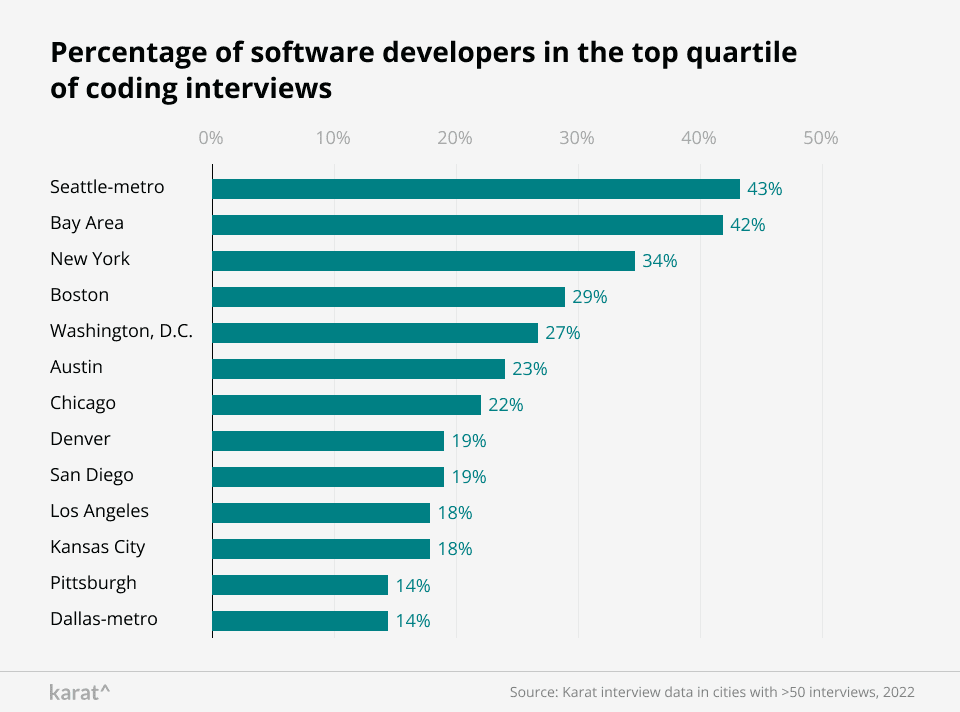
At first glance, the list is similar to our 2021 report. The big three tech hubs remain at the top with the Seattle metro area (including Redmond, Bellevue, and Kirkland), the greater Bay Area (including San Francisco, Oakland, San Jose, and other cities in the region), and New York City outpacing other regions. However, when focusing on the top quartile of candidates, Seattle and the Bay Area distinguish themselves slightly more than New York.
This supports the broader industry-based trend we’ve seen of candidates with Big Tech backgrounds outperforming those with financial services backgrounds historically (although based on the close rates mentioned earlier, this may shift in 2023).
The data also contradicts the notion that tech workers are fleeing tech hubs to other locations–as the gap between top quartile concentrations, and top 50% concentrations has grown rather than decreased over the last year (i.e. there is a higher concentration of top tech talent in Seattle and San Francisco compared to past years).
Pittsburgh saw the steepest drop in our rankings under the new methodology, with Boston claiming the new top city outside the big three, and even threatening to overtake New York in future years (not that there’s a rivalry there or anything). Austin and Chicago also fared better than in previous years, climbing the rankings, as Portland and Atlanta dropped just outside the “next-10” list in favor of Kansas City and Denver.
Top global cities for hiring software developers
Looking globally, there are four cities that outperform the major U.S. tech hubs, and several others rank favorably alongside the U.S. list of top cities for hiring software developers. Stay tuned next month for a deeper dive into the international rankings!
Related Content

AI Hiring
10.08.2026
90% of U.S. technology leaders are using AI to increase output without reducing engineering headcount, while 75% globally say a strong engineer is worth at least 3x their compensation SEATTLE, October 8, 2026 – AI is increasing the capacity of engineering organizations, but technology leaders are largely using those productivity gains to build more rather […]
AI Hiring
09.16.2026
To assess engineering skills in financial services, organizations should define the competencies needed for each role, develop interview content that measures both foundational engineering and AI skills, evaluate candidates in realistic environments, and standardize their interviews and scoring. By taking these steps, you’ll be able to reliably identify software engineers who can build secure products […]

AI Hiring
08.24.2026
In every issue of The Talent Signal newsletter, Karat Co-Founder and President Jeffrey Spector explores the trends reshaping technical hiring. From changing skill requirements to new hiring challenges, the series helps engineering leaders understand how the broader landscape is changing software engineering and what it means for building high-performing teams. One of the biggest themes […]